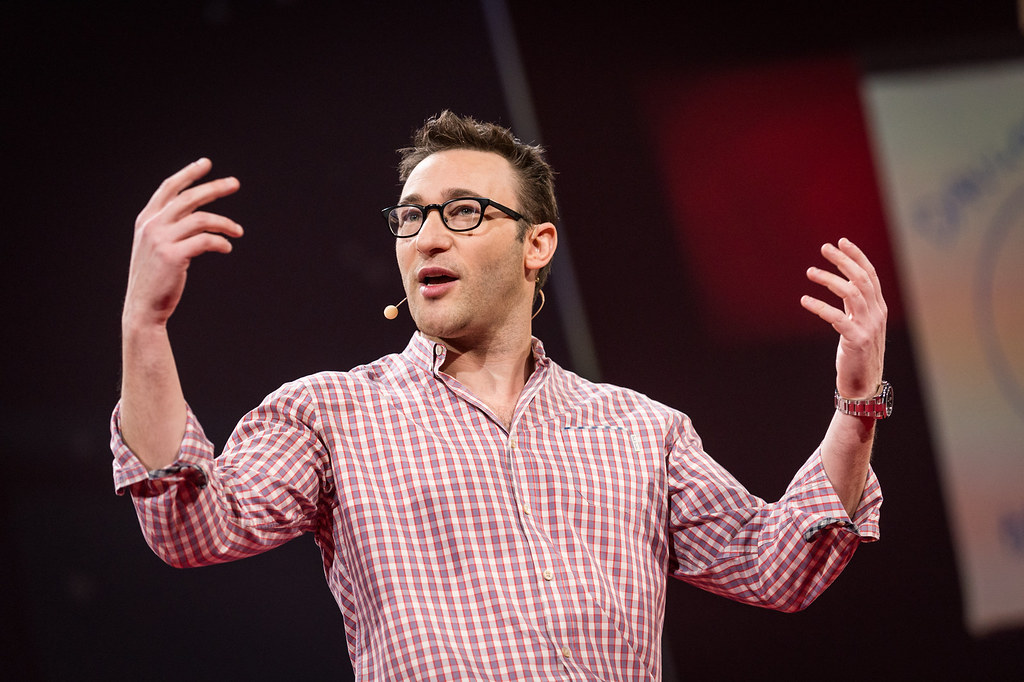
Does Generation Z really want feedback, or are they just too sensitive to receive it? Speaker Simon Sinek recently addressed this topic with his colleague Kristen Hadeed during a webinar. Their discussion brought an important nuance to this notion.
The paradox is as follows. On one hand, 73% of Generation Z employees (born between the late 1990s and early 2010s) state without hesitation that if they don’t receive “regular feedback” from their employers, they will resign (StaffCircle, 2023). In an older survey, 65% went so far as to say they wanted feedback at least once a week (Center for Generational Kinetics, 2018).
Meanwhile, on the management side, 58% of managers think Generation Z wants compliments and recognition, even when they fail (Resume Template, 2025). The question then arises: does this generation really want feedback, or simply to hear that they are “good” and “competent”?
“I think this generation has never received honest feedback,” says Kristen Hadeed. “When I gave feedback to students in my company, it was very clear that it was the first time they were receiving it. That’s why I think it’s important to teach: ‘Here’s how we’re going to give you feedback, and here’s why we do it.’ And then, I think the key takeaway is that every time I give you feedback, I want you to give me some too. It has to go both ways.”
A Two-Way Street
Recognizing that feedback is a two-way street appears to be the key element that escapes the 58% of managers who see the new generation as a bottomless pit of praise-seeking. When a boss agrees to open a dialogue as equals, between two people in the same organization, the employee under their responsibility will likely be more receptive to constructive criticism.
“Of course, the first few times, it might be very difficult,” warns Kristen Hadeed. “We’re going to work on it together. I’ve seen Generation Z members become incredible communicators and people capable of giving and receiving feedback in amazing ways. We need patience, empathy, and tools,” insists Kristen Hadeed.
Simon Sinek explains how the gap can be felt between a generation that was raised the hard way and the new generation, which may have been raised as “entitled children.”
“The older generation, we were used to being torn apart by our parents or teachers—that’s just how it was. That’s just how things worked. So, for a generation entering the workforce that isn’t familiar with what negative feedback can bring, they need to understand that it’s not an attack. However, team leaders also need to learn how to give feedback. Not everyone knows how to do it, and sometimes it can come out like a punch when it didn’t need to.”
Simon Sinek suggests that managers ask their employees from the new generation how they want to receive feedback.
“It’s similar to communication expectations within a team,” concludes Kristen Hadeed. “The idea is to look at what each person on the team needs to be at their best in these conversations. Honestly, I think Generation Z is misunderstood on this point. Many people haven’t learned how to give feedback. So they end up receiving feedback that may not have been delivered in the best way.”
These are relevant insights for establishing healthier and more supportive relationships at work.

 training.isarta.com
  training.isarta.com