Out with rigid job descriptions, in with a skills registry regularly updated for its approximately 175,000 employees. This is what the organizational transformation PwC undertook a year and a half ago with the help of a technology platform looks like. An evolution that hasn’t come without pain, we learned at the Tech HR Innovation Summit last February.
For Sonia Boisvert, Chief Human Resources Officer of PwC Canada, there was a sense of urgency for her organization to change its human resources allocation process.
“Our clients’ needs have become more complex,” she announces. “And today, if we’re not ready to respond to a request for proposal within a week, we won’t get it… Our competitors will be able to respond faster than us.”
The world-class auditing firm needed more agility to deploy its 175,000 employees on projects that could run anywhere from Quebec to the United States to New Zealand. So, a year and a half ago, it decided to become a “skills-based” company. What does this mean?
“Instead of having a role, a responsibility, a job description for each employee, we look at what skills will make a project interesting for an employee,” explains the Chief HR Officer. “From an organizational perspective, we want to ensure we have the right skills that meet client needs in a timely manner.”

According to Sonia Boisvert, the virtue is twofold: on one hand, PwC will be able to respond more quickly to its clients. On the other hand, skills-based management is more motivating for employees.
“As an employer, we’re here to develop our talent. We can no longer place them in a hyper-limiting job description, telling them: ‘you stay in your role and in three years you’ll be senior, then you’ll take your boss’s place when they retire.’ The employee isn’t growing; they’re on a linear path that doesn’t match the market.”
Skills-based management also has the virtue of valuing all of an employee’s competencies, both human and technical, as well as those from their personal or professional experience and formal training.
“We tell the employee: I don’t value you solely because you have skills ABC that match your job description. What are your human skills? In life, you’ve done lots of things alongside your work. You’ve studied and learned many things. Bring them into the [competency] matrix.”
Technology as Support
To reach an operational state of skills-based management, there are foundational elements to put in place, including an employee taxonomy.
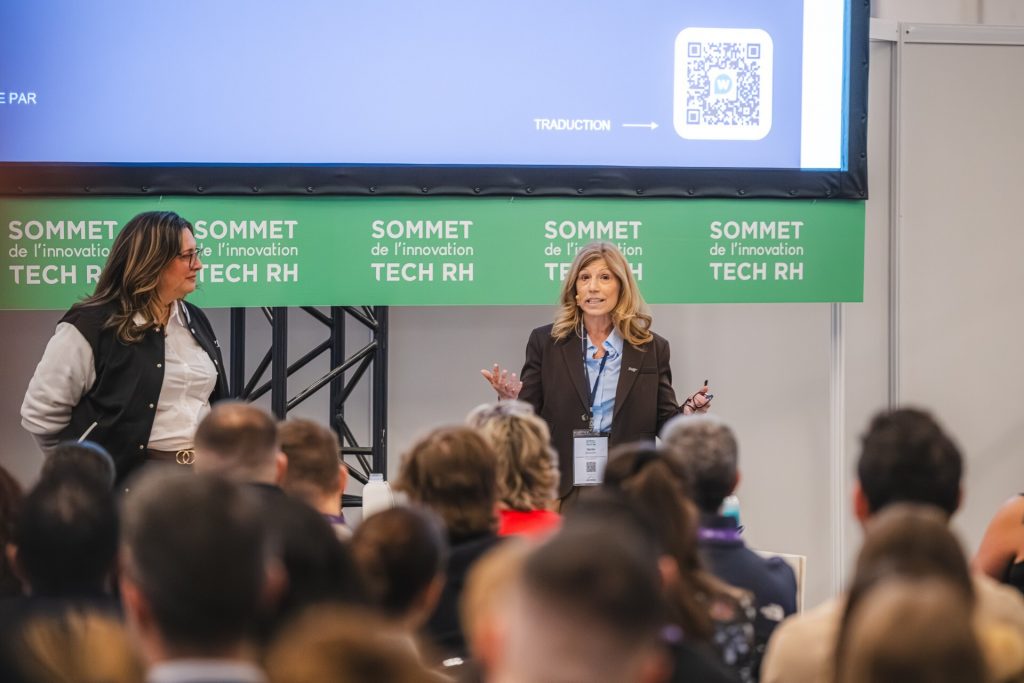
“Taking stock of the real situation is the foundation for becoming a skills-based organization,” explains Kareen Emery, PwC Canada’s first Director of Workforce Transformation. “The taxonomy is a dictionary of our competencies—it’s the foundation. But maintaining it, yes, it’s painful. It’s not simple. People don’t always understand how to describe themselves in a taxonomy.”
To accomplish this colossal task, PwC turned to technology. The consulting firm moved away from Excel spreadsheets filled with columns of behavioral and technical competencies to implement a AI-powered platform, where employees can enter their competency profiles.
For Sonia Boisvert, the approach is crucial. Before asking employees to input their skills in this platform, you need to put mechanisms in place that clearly connect archived skills to concrete projects or professional development opportunities.
“Collaborators need to see it and understand there are benefits for them. Otherwise, they won’t have the reflex to update their skills.”
The Chief HR Officer mentions that employees have the opportunity to register in the platform the skills they would like to develop.
An “Extraordinary” Shift
PwC is midway through this organizational transformation. The skills mapping is complete. Employees can also identify skills they want to develop in order to access continuous training through an internal platform. What remains is to deploy the “skills allocation based on incoming mandates” component; this step will be completed next August.
“It’s a long process that’s still underway at PwC,” acknowledges Kareen Emery. “It gets rough around the edges sometimes—we’re like any other organization. You need to rally leadership, managers, and employees. You need to understand the technology involved. It’s a shift that’s long, but it’s extraordinary,” she insists.
Sonia Boisvert is convinced of it: PwC is today better positioned to respond to a market evolving at lightning speed, both from a technological and geopolitical perspective.

 training.isarta.com