The Reuters Institute, a media research center linked to Oxford University (United Kingdom), has just published its imposing (170 pages) annual report. A reference for analyzing new trends in information consumption. The summary in 4 key highlights.
Nearly 100,000 people were surveyed online in 48 countries across all continents to obtain these results. A representative sample as rare as it is precious for understanding information usage patterns. Let’s look at the main findings.
1- The emergence of conversational AI robots for getting news
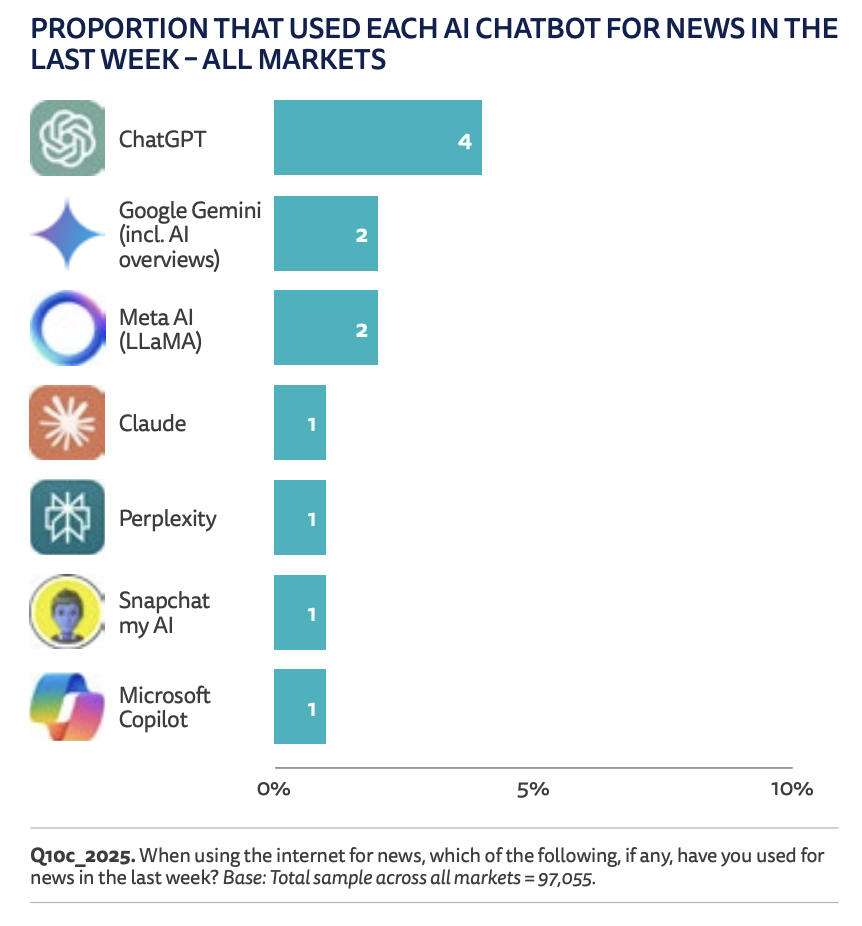
This is a trend that seems inevitable: the use of generative AI for getting information. Admittedly, it’s still in its infancy. Only 7% of surveyed individuals use ChatGPT or Gemini, for example, for this purpose each week. But it’s starting to become significant among those under 25 (15%). 3% of the latter even declare it to be their main source of information.

A practice that worries not only Google, which sees part of its audience turning away from its search engine. But also the media, which can only deplore the progressive distancing of their audience in the information value chain.
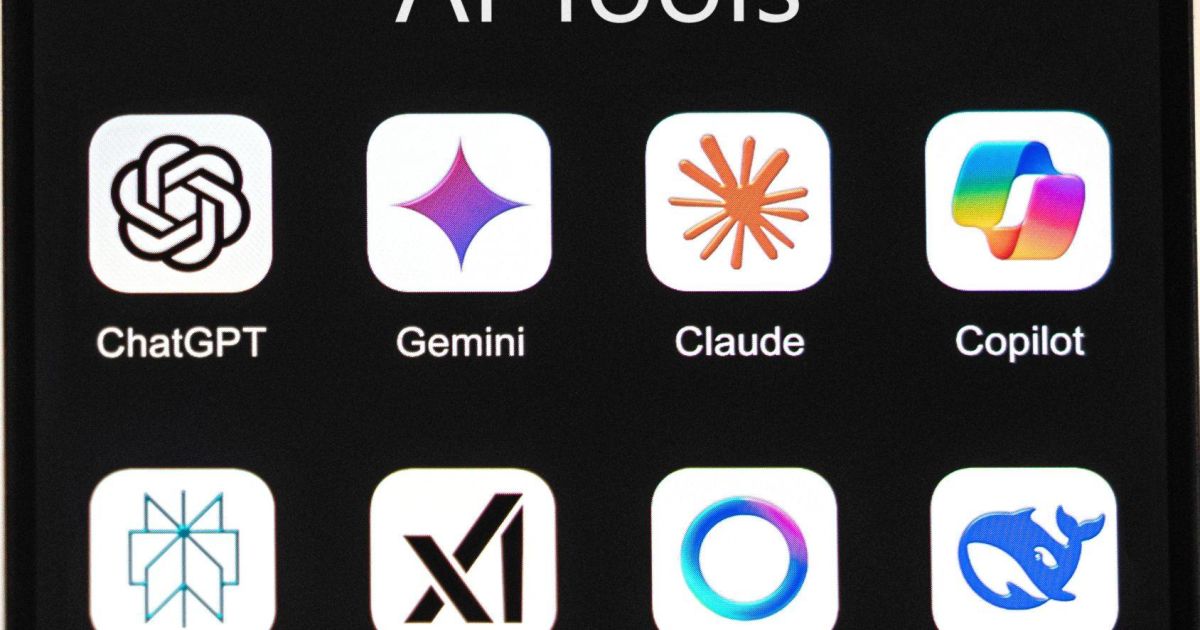
Unsurprisingly, it’s ChatGPT that captures most users, even though the battle is just beginning with Google Gemini, Meta AI, Claude, or Perplexity.
2- Social media and social videos still growing
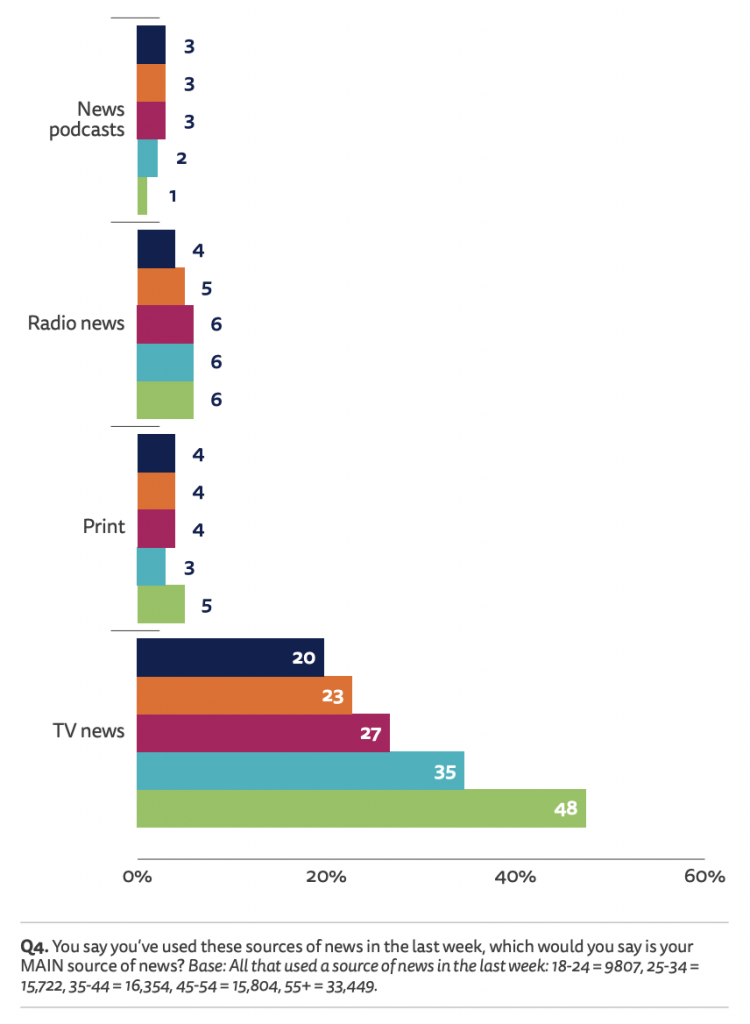
The shift has happened over a generation. Today, all those under 35 get their news primarily on social media ahead of news websites or television (see chart above).
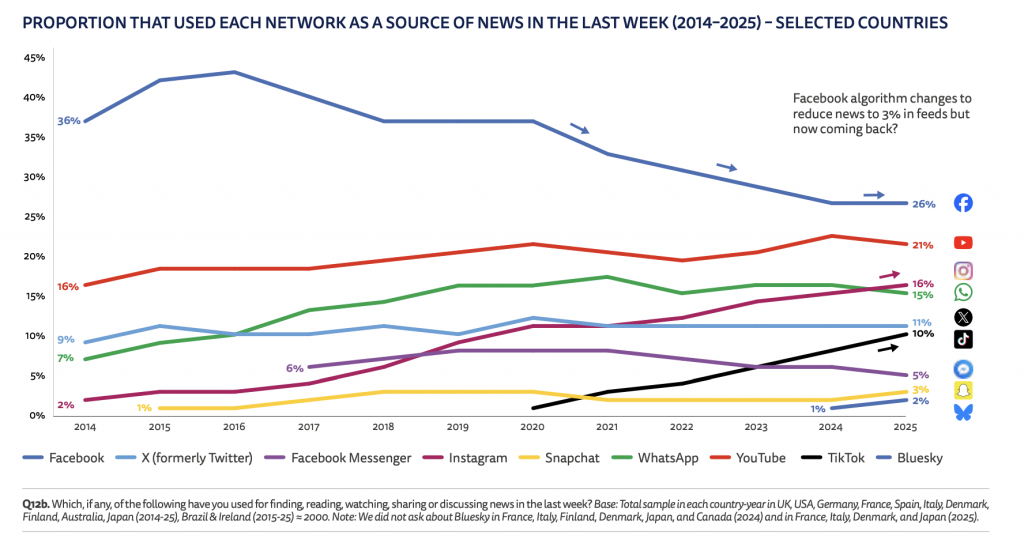
Among the platforms used, despite its gradual decline, Facebook remains number 1 ahead of YouTube. In 3rd position, Instagram has just overtaken WhatsApp (these last two applications being in Meta’s portfolio). Meanwhile, TikTok is making a meteoric rise and should surpass X/Twitter next year at this pace.
In certain countries like Brazil or the United States, social media is the main information tool for more than a third of the population, while in Europe or Japan, the proportion barely exceeds 10 to 20%.
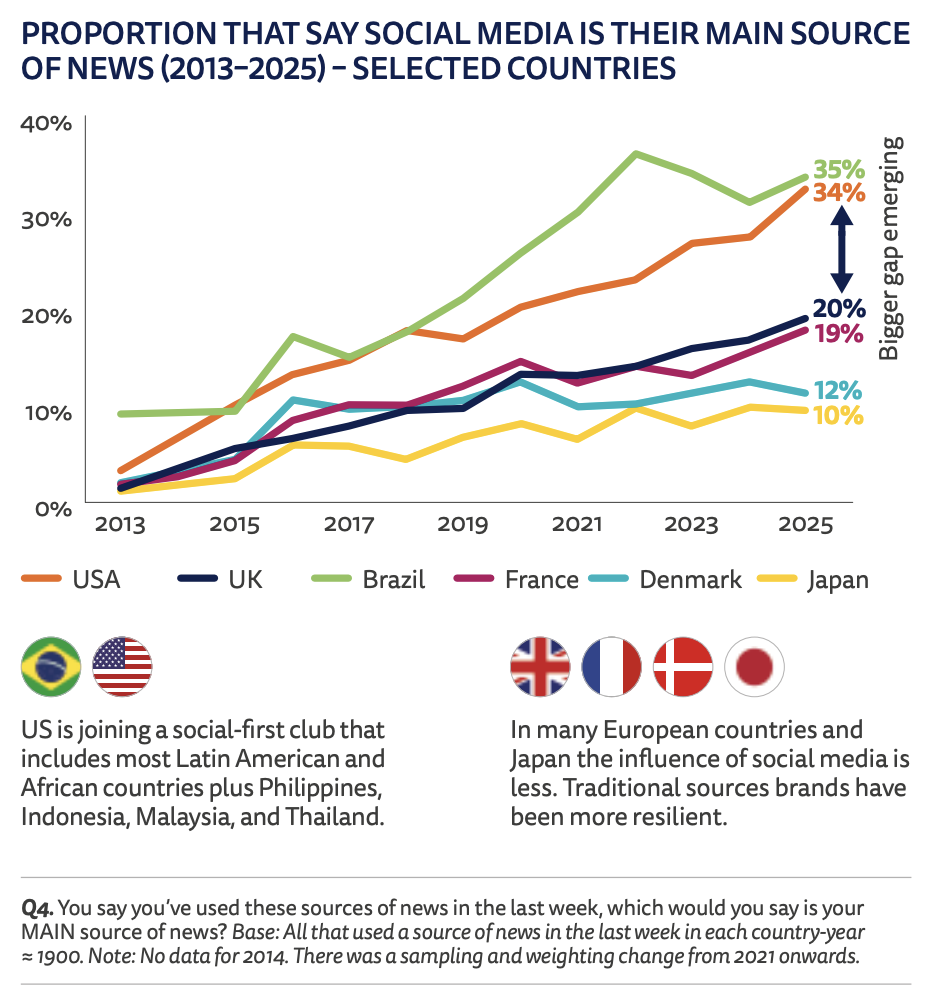
Note that the share of respondents who watch online videos for information has risen from 52% in 2020 to 65% today.
3- The decline of traditional media
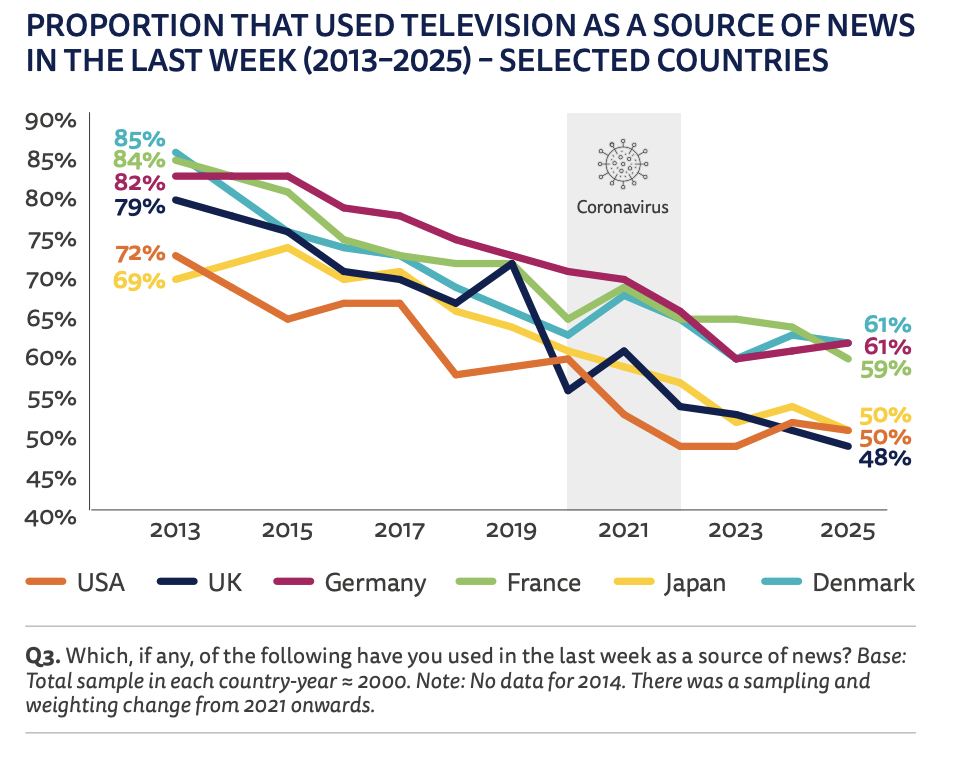
An inevitable corollary of the previous points: the slow and inexorable decline of traditional media, like television which was the weekly information channel for nearly 80% of the West just ten years ago. Alas. This figure is about to drop below 50% in the United States and Japan and is barely above 60% in France and Germany.
According to the report, in the United States, morning TV shows like “Good Morning America” have lost nearly half their audience in ten years!
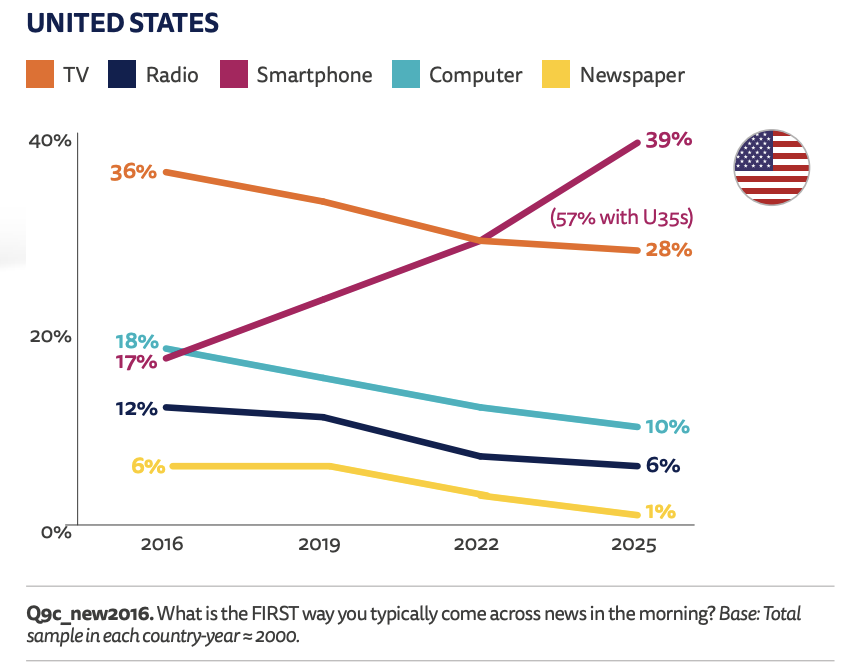
Another instructive piece of data: in the United States (in line with other countries), the first reflex for getting news in the morning is now the cell phone (39%, including 57% of those under 35). Relegating radio (6%), paper newspapers (1%), and even computers (10%) far behind.
4- Trust in media is stabilizing
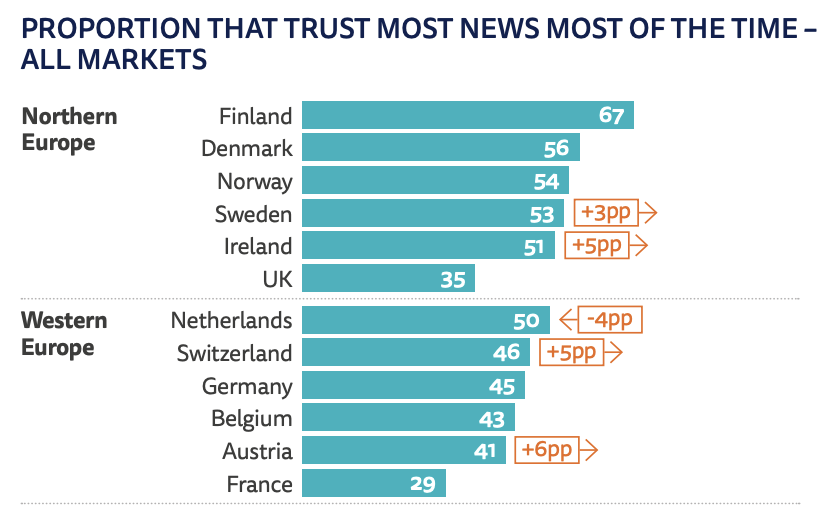
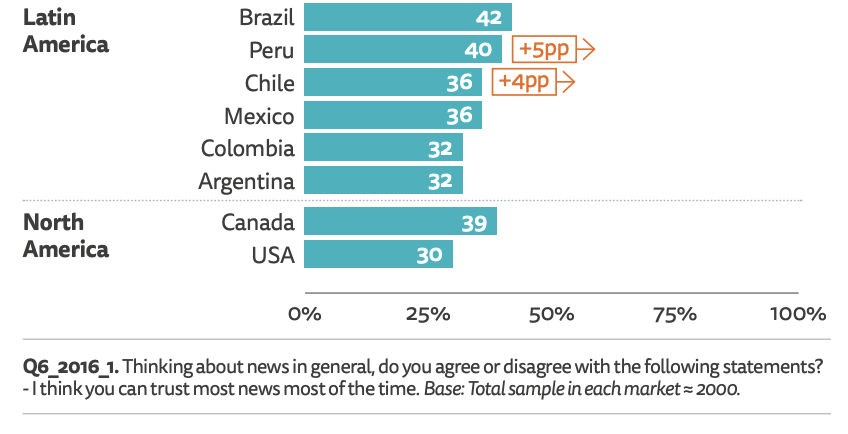
Another element scrutinized each year in the report: trust in media. For the third year, it’s stable at 40% globally. At 29%, France displays one of the lowest rates among the countries studied, just behind the United States (30%) while Scandinavian countries are at the top (Finland (67%), Denmark (56%), Norway (54%), Sweden (53%)). Canada is in between at 39%.
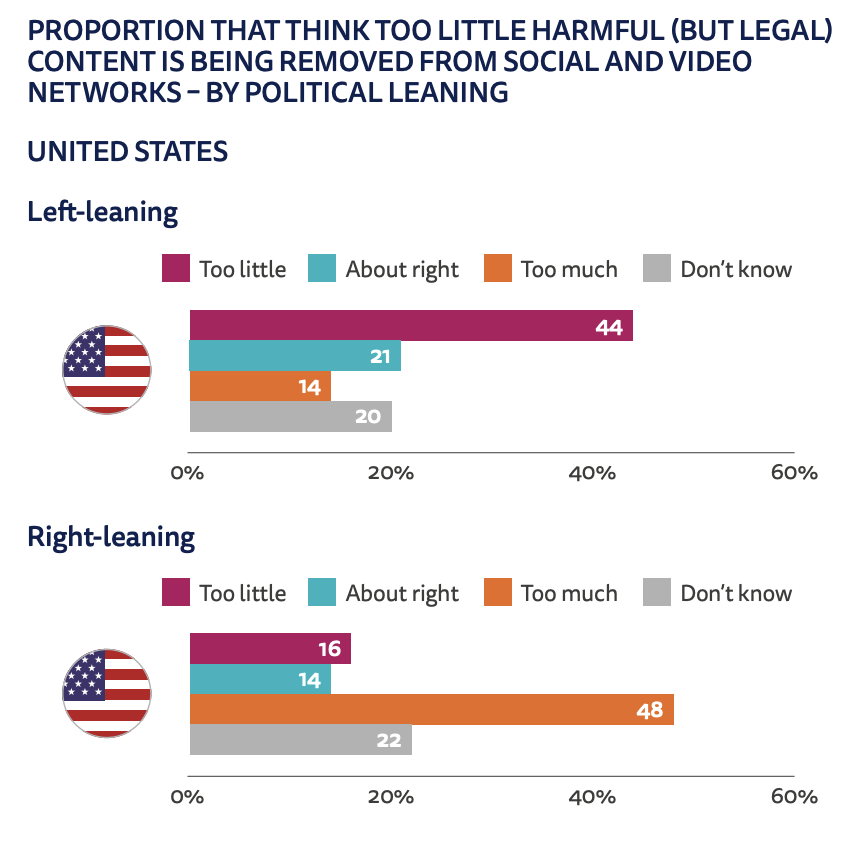
One last chart particularly struck us: the radical difference in vision in the United States on social media moderation according to political side. A country cut in two.

 training.isarta.com
  training.isarta.com