
Beyond Donald Trump’s antics at Davos, the World Economic Forum has just published its traditional report on the future of work, based on testimonies from more than 1,000 leaders representing 14 million employees. AI, new skills, job creation and destruction… Summary in 3 key takeaways.
1- Jobs: Creative destruction
First global lesson: global employment should grow by 7% by 2030, representing a net creation of 78 million positions. An eloquent figure that nonetheless masks a more contrasted reality: 170 million new positions will be created while 92 million will disappear. In other words, one in five jobs (22%) will undergo structural transformation.
In detail, the report highlights strong volume growth in “frontline” roles (farmers, delivery workers, laborers, sales representatives, healthcare workers, educators…). On the technology side, data specialists, software engineers, AI specialists, and roles in energy transition (vehicles, renewable energy) will experience the fastest growth in percentage terms.
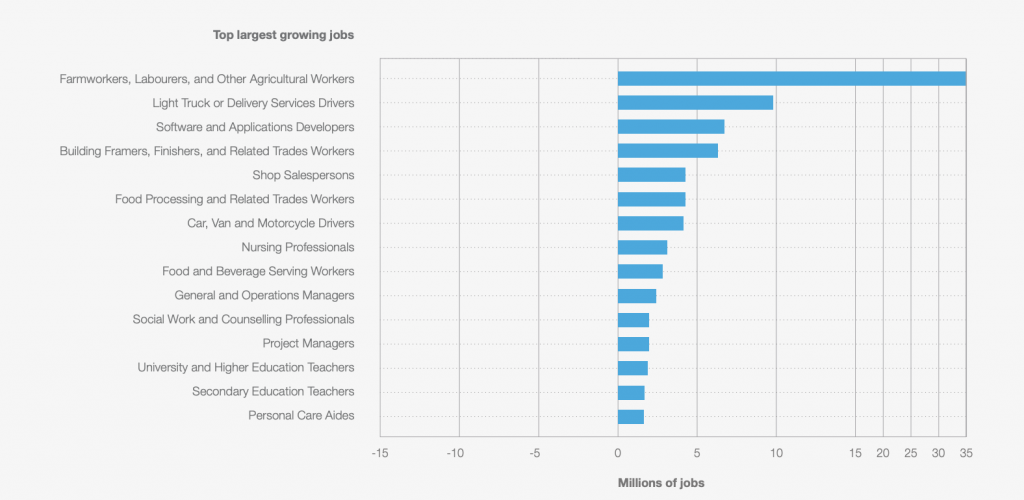
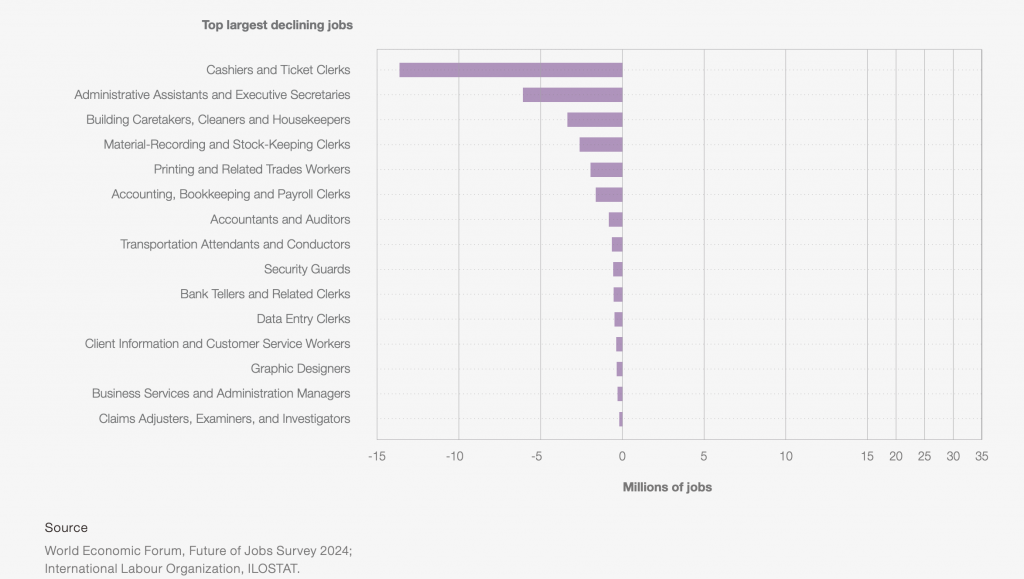
Conversely, office employees (administrative assistants or executive secretaries) and cashiers (postal services, banks…) are expected to experience the greatest decline in absolute value.
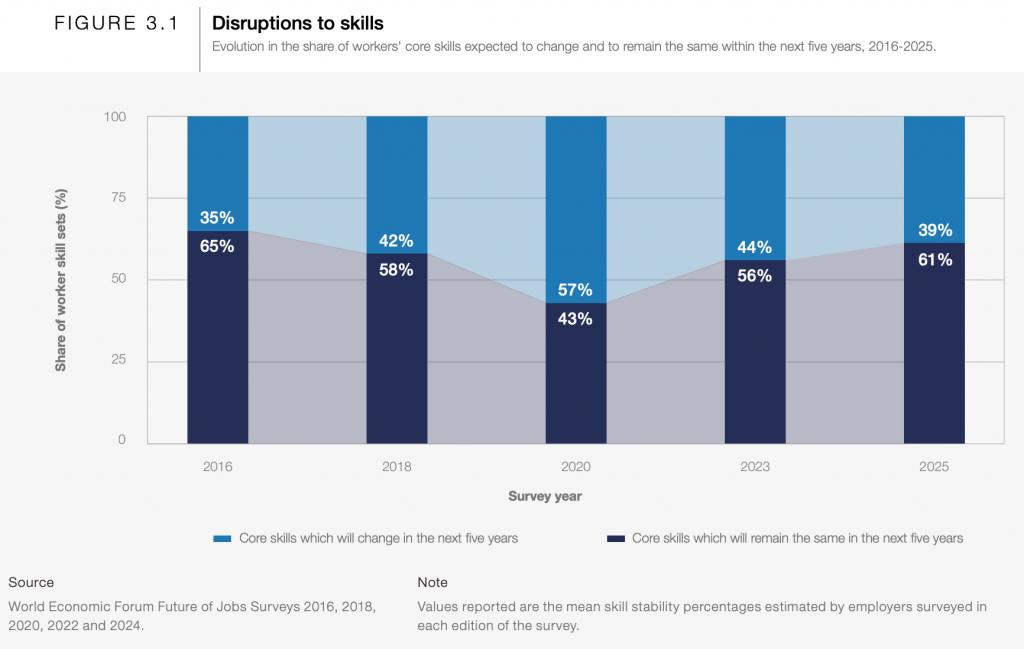
2- 39% of today’s skills obsolete by 2030
The other notable finding concerns required skills. According to respondents, 39% of skills will need to evolve by 2030. A figure that seems high at first glance, but which is actually lower than in previous editions (57% in 2020 and 44% in 2023). How to explain this?
“Increased attention to continuous learning programs, upskilling, and professional retraining allows companies to anticipate and better manage future skills needs,” the report indicates.
This is evidenced by the rate of 50% of employees having undergone training, compared to 41% in 2023. Knowledge is spreading.
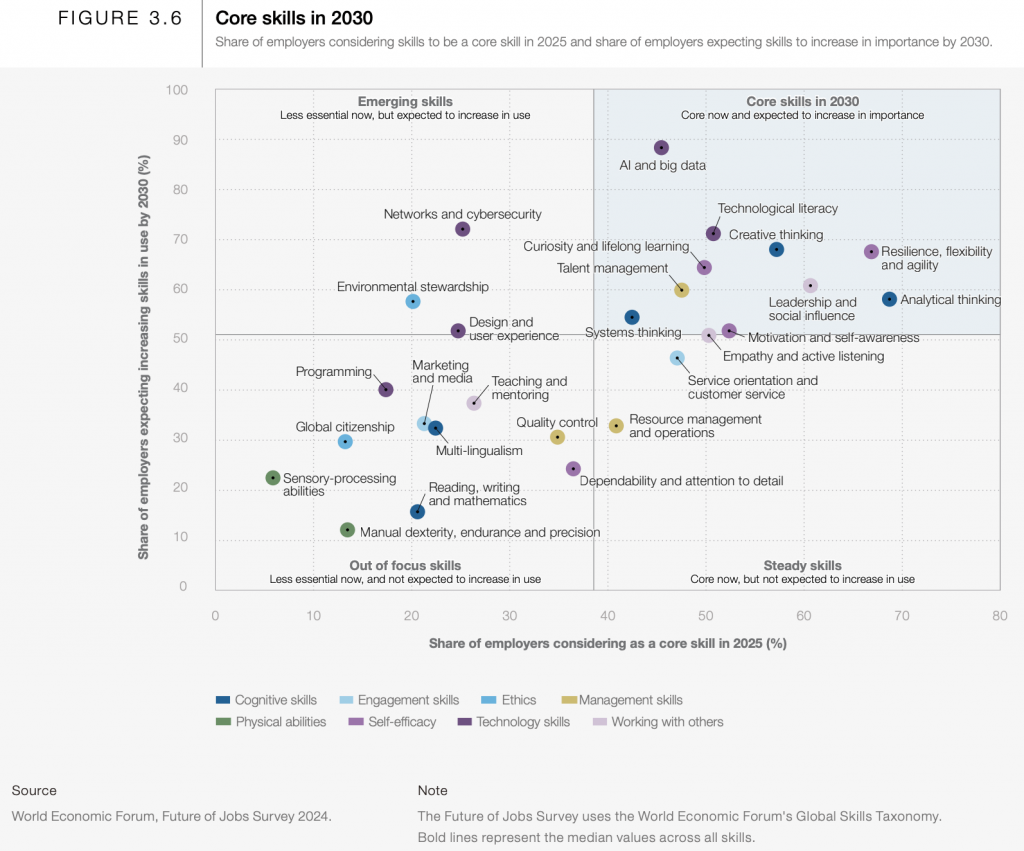
Key skills in 2025? Analytical thinking (69%), resilience/flexibility/agility (67%), and leadership and influence (61%).
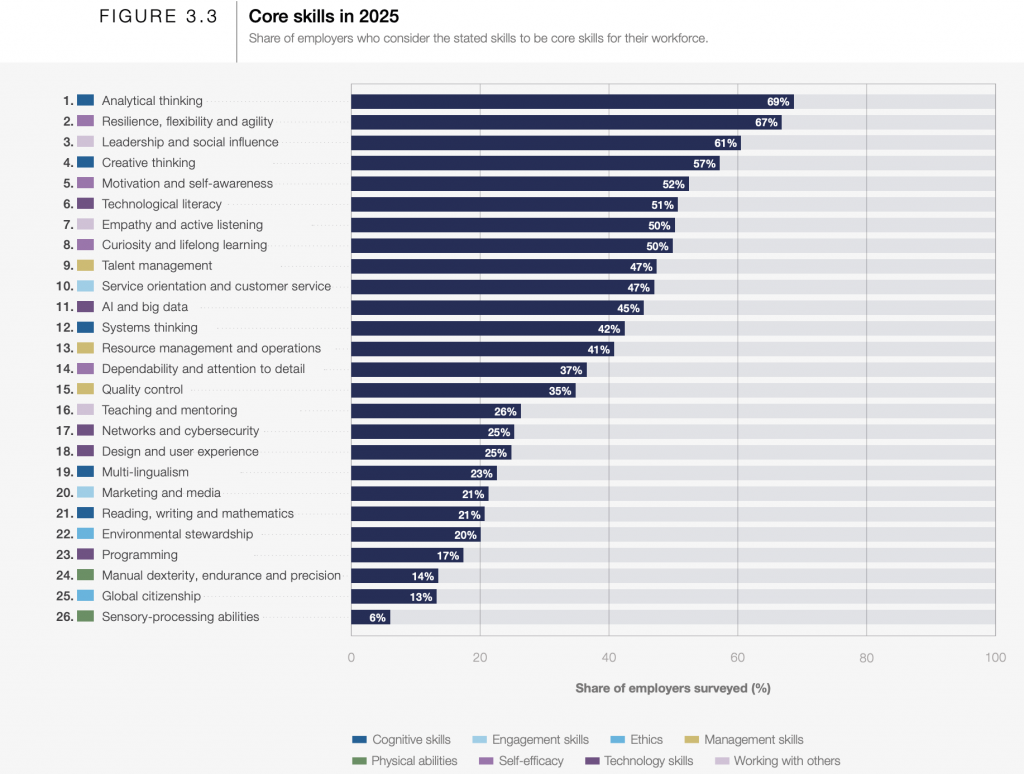
Unsurprisingly, AI and technology skills are among the emerging skills to acquire in the coming years.
3- What HR strategies in response to these transformations?
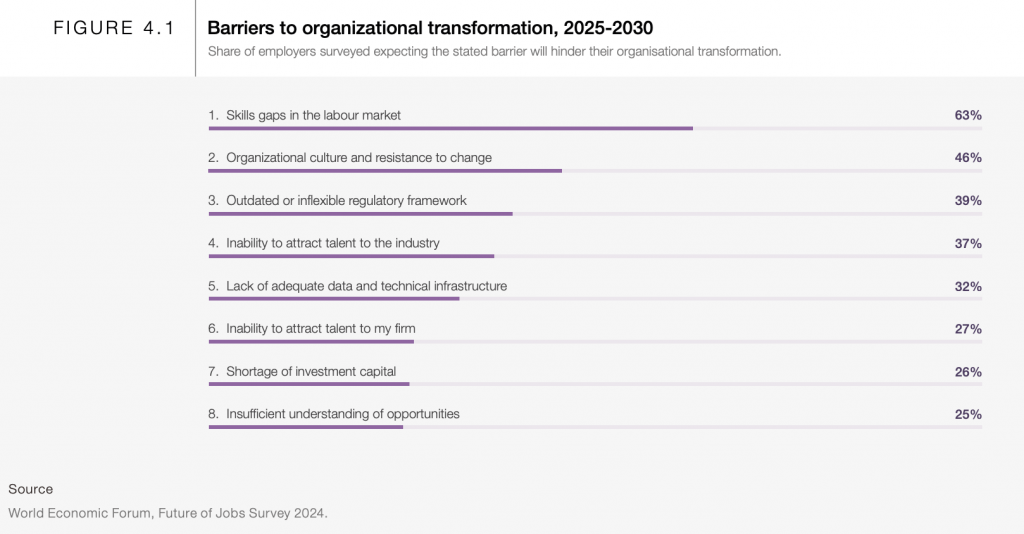
Finally, the report examined the strategies adopted by employers in response to these macroeconomic trends. On the one hand, it should be noted that the major obstacle to the transformation of their organization, according to them, is not culture and resistance to change but… the skills gap (between those that exist on the market and those that would be needed to carry out these transformations).
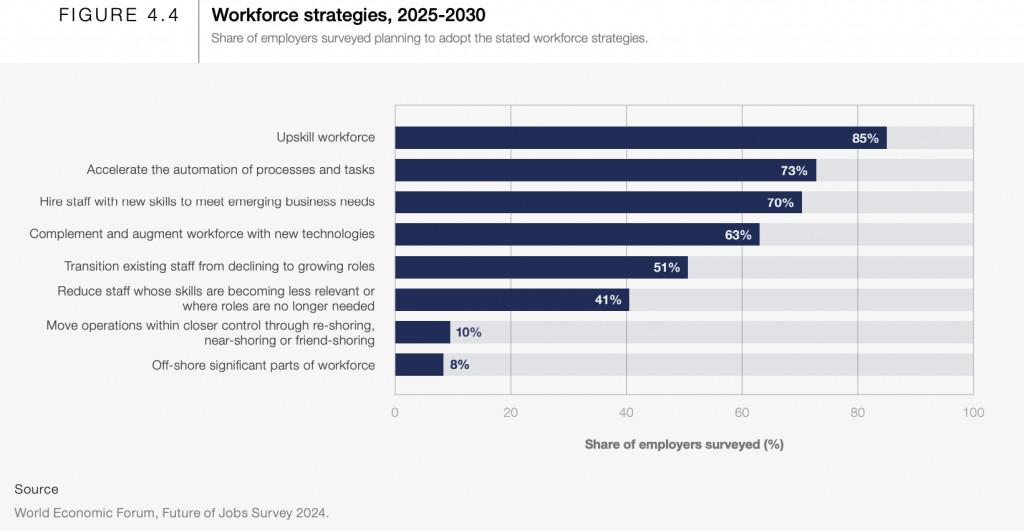
Consequence: 85% of employers surveyed plan to prioritize upskilling their workforce, while 70% will hire personnel with new skills (while 40% plan to reduce staff whose skills are becoming less relevant).
Majority practices for attracting talent? Support for employee health and well-being (64%), retraining and upskilling initiatives (63%), or improving career paths (62%). Salary increases come only after (50%).
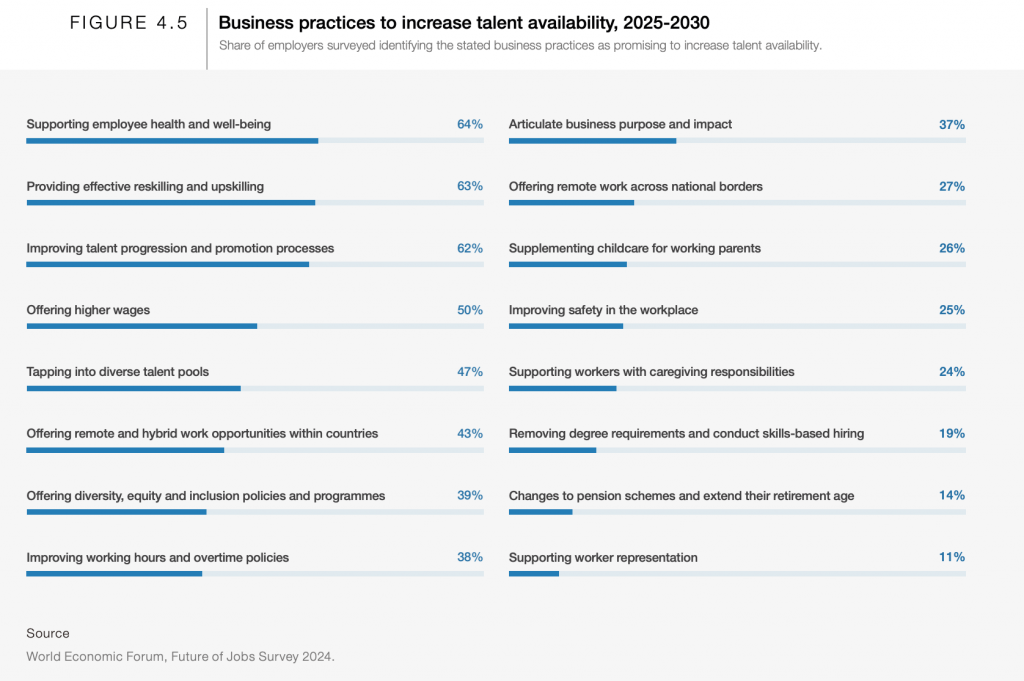
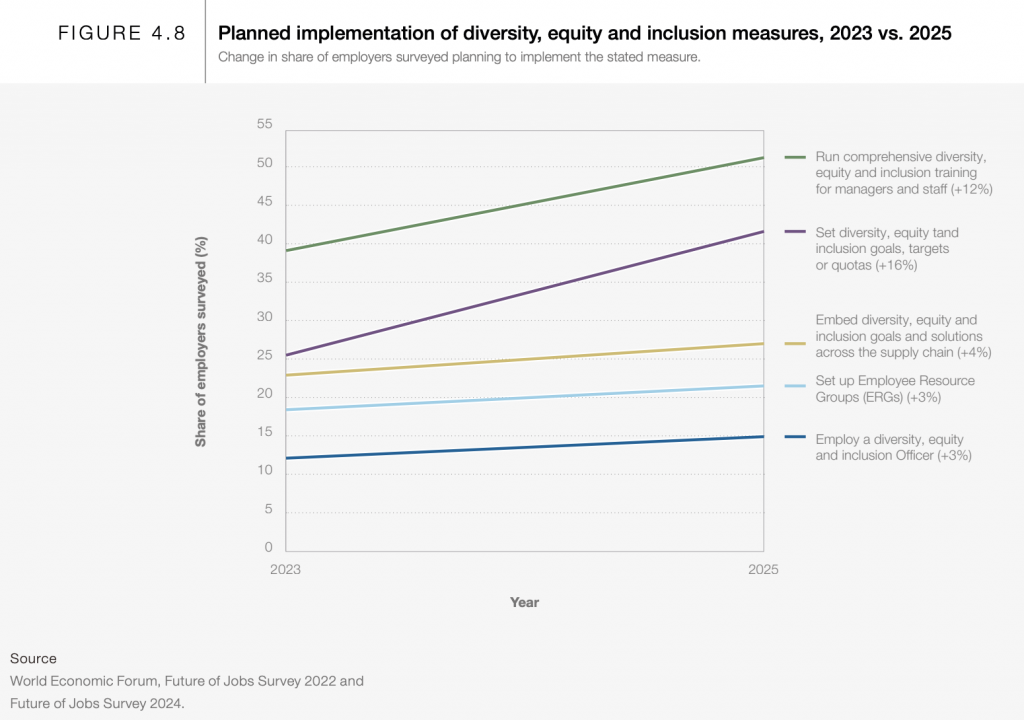
Finally, the survey notes that, despite the headwinds currently blowing particularly in the United States, the adoption of diversity, equity, and inclusion initiatives continues to increase. It must be said that the potential for expanding talent availability by exploiting diverse talent pools is highlighted by four times more employers (47%) than two years ago (10%).
Certainly global insights, but ones that shed light on major future trends in the world of work and thus on decisions to anticipate in the years to come!

 training.isarta.com