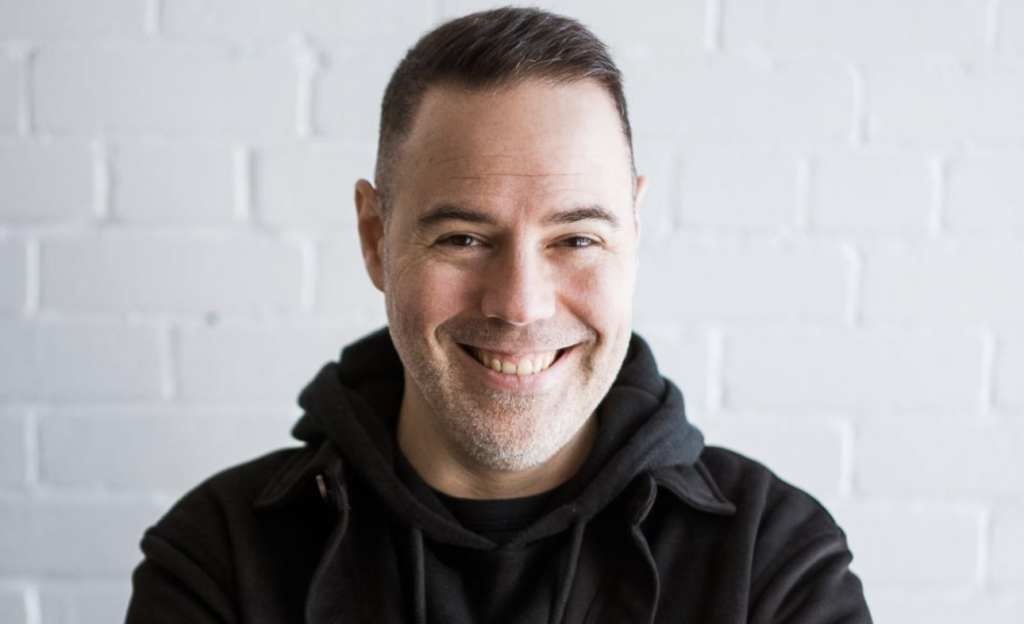
Due to the current political and cultural polarization, many internet users are stepping back from posting on social media and shifting their conversations to private messaging on digital platforms. This content inevitably falls outside brands’ radar — which is what’s known as “dark social.” We explored the topic with Hugo Cesaratto, a digital marketing specialist.
Hugo Cesaratto is quick to reassure: “dark social” has nothing to do with the “dark web.” The term refers to exchanges between internet users that take place in private messaging channels on social networks — the so-called “DMs” (direct messages) on LinkedIn, Instagram, Facebook, Discord, and so on.
In digital marketing, there are various monitoring tools to detect brand mentions on social media — but those mentions have to appear in public posts,” explains the influencer marketing specialist. “Private conversations fly completely under brands’ radar. That’s what we call dark social.”
In other words, it’s the modern, digital version of good old word-of-mouth, he argues. Hugo Cesaratto also sees an important reason to pay attention to it:
After being so publicly vocal with their opinions on social media, a lot of people are now tending to pull back a little. People no longer share their opinions with anyone who’ll listen, the way they did back in the blogging era. Today, internet users tend to react to a public post by commenting on it privately, within their circle of friends.”
Given the current social and political polarization, users are indeed less likely to engage publicly with a cause or a brand. In the DGTL Study — 2026 Edition, 66% of internet users said they feel “distrustful” on digital platforms. The same survey found that young people’s engagement is migrating toward DMs, which confirms the growing dark social thesis.
Attribution vs. Econometrics
The immediate consequence of this phenomenon is that brands lose visibility into the overall sentiment toward them. For obvious legal reasons tied to data privacy, they cannot access this portion of the web. However, strategies do exist to try to map its contours and gauge its content.
In digital marketing, there are two schools of thought: attribution, where you try to measure every step of a user’s journey in order to convert them through paid advertising,” explains Hugo Cesaratto. “And then there’s econometrics, which looks more at the overall impact of an action on the brand’s environment. Dark social belongs to that second approach.”
The digital marketing specialist offers two strategies for getting a handle on private content. First, a brand can measure the number of shares a post receives, since a significant portion of those shares go to private channels. Second, the brand can insert itself directly by creating its own private channel and inviting users to join.
By creating community chats on Instagram or Facebook, you get a direct window into what’s happening behind the scenes. You can also create discussion groups on Reddit or Discord to capture how internet users feel about your brand.”
For now, he acknowledges that only brands with highly developed marketing strategies are paying attention to this issue.
It’s a strategic consideration worth having when evaluating the impact of social media on your brand. That said, not all brands are sufficiently educated on the topic yet,” he concludes.

 training.isarta.com