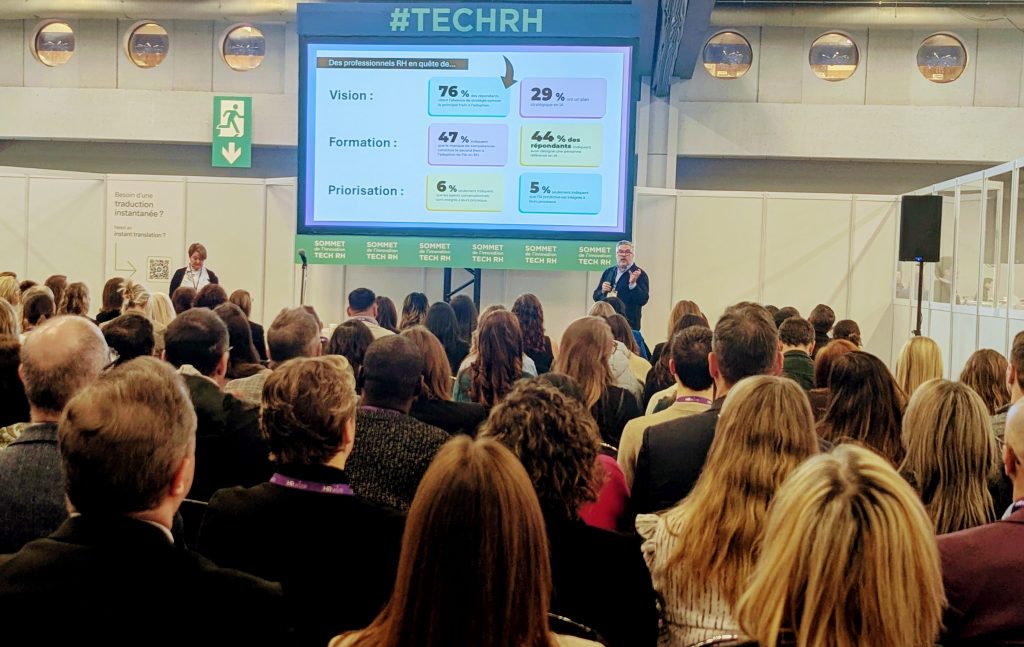
The “HR Day 2025 – Innovative Strategies for Retail,” organized by the Quebec Retail Council (CQCD) on April 23, was an opportunity to take the pulse of current HR trends. Speaker Sarah Jodoin-Houle, founder of the HR consulting firm La Talenterie, reminded that salary transparency continues to gain ground. Here’s an update on the issue.
At its core, this is a global trend that is slowly approaching.
“New laws on salary transparency are emerging all over Canada, but also in the United States and Europe,” explains the founder of La Talenterie. “These laws are different from one place to another, they don’t all have the same provisions or the same scope, but the foundation remains the same. The goal is to address social inequities.”
In Ontario, a law has just been adopted. This change was discussed, then finally put back on track with implementation in January 2026. Provisions will force organizations to present information on the compensation being offered on public job postings.
“If you have operations in Ontario and you advertise positions, your Quebec employees will probably see them too,” she continues.
A fundamental trend
Beyond the law, leaders must understand that the practice is gaining ground in customs, whether there’s legislative change or not.
“Among Generation Z, there is a clear expectation: ‘if you don’t put the salary range, why would I take time for you?'” confirms Sarah Jodoin-Houle. “Overall, these profiles have the luxury of refusing or choosing.”
Even though this movement now affects all categories of the population.
“Friends tell me: ‘If there’s no range – I don’t apply,'” she confirms.
Beyond the moods and rumors from job seekers, Sarah Jodoin-Houle measures a concrete change in practice among her employer clients. In an in-house survey compiled in the fall, 44% of companies stated that they had displayed a salary range for certain key positions during the recruitment process. That’s still a large half that have not yet moved to salary transparency!
“There are still many organizations that are reluctant to talk about compensation with their employees. There are HR professionals who are afraid to talk about compensation because questions come quickly, and as soon as you pull on one thread, the whole sweater risks unraveling.”
Sarah Jodoin-Houle understands the discomfort: a company can cause a lot of harm to its employer brand by communicating its salaries too early. Her message, however, is clear:
“If we’re not ready to communicate, we need to ask ourselves why, then start equipping ourselves.”

 training.isarta.com